

No products in the cart.
Return To Shop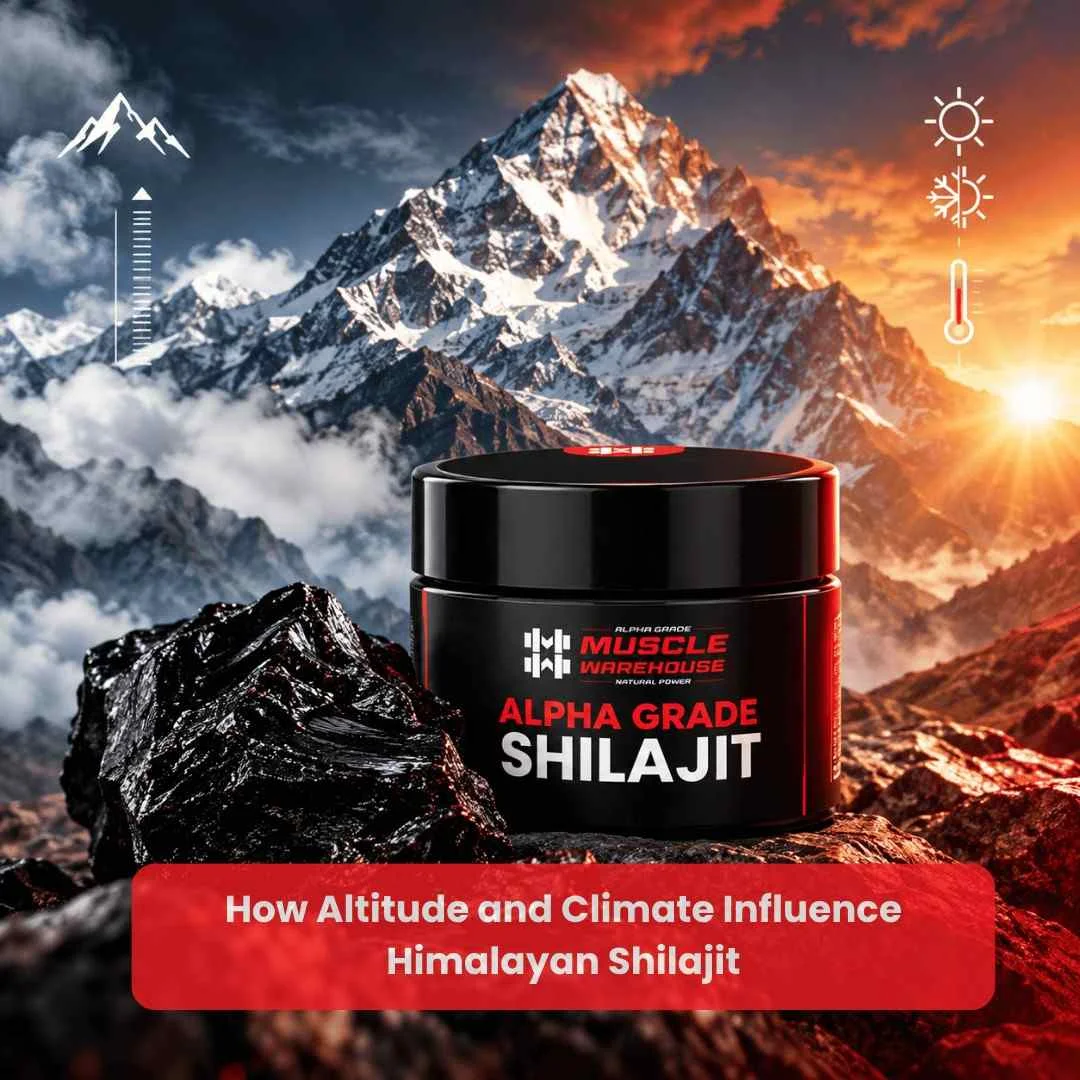
How Altitude and Climate Influence Himalayan Shilajit
Altitude and Climate Influence Himalayan Shilajit is an important topic for understanding its natural origin and the environmental conditions found in mountainous regions. Himalayan Shilajit is associated with high-altitude environments, where temperature changes, seasonal weather, rocky terrain and organic material contribute to the conditions in which it develops.
However, altitude and climate do not tell the whole story. Shilajit can vary between source regions, and its final characteristics also depend on collection, processing and storage. Therefore, understanding these environmental influences can help UK buyers make more informed comparisons when purchasing Shilajit.
How Altitude and Climate Influence Himalayan Shilajit Formation
Altitude and Climate Influence Himalayan Shilajit begins with the distinctive conditions found in mountain environments. High-altitude areas experience changes in temperature, sunlight, precipitation and seasonal weather. These factors influence the surrounding ecosystem, rock surfaces and organic material.
Shilajit is a complex natural material associated with organic matter and geological environments. Its development takes place over long periods, and climate Influence Himalayan Shilajit through environmental conditions that vary by location.
Consequently, altitude alone cannot determine whether a particular Shilajit product is authentic or high quality. The wider environmental conditions and the characteristics of the source material also matter.
Why High Altitude Matters for Himalayan Shilajit
High-altitude mountain regions have environmental conditions that differ from those found in lower areas. Temperatures can change significantly between day and night, while seasonal snow, rainfall and freezing conditions can affect the surrounding landscape.
These conditions influence how organic material and exposed rock surfaces interact over time. In suitable mountain environments, these factors form part of the wider natural setting associated with Himalayan Shilajit.
Nevertheless, a product does not become automatically superior simply because a seller describes it as high-altitude Shilajit. Buyers should look for clear sourcing information rather than relying on altitude claims alone.
How Climate Affects Himalayan Shilajit
Climate influences the physical environment in which Shilajit-associated material occurs. Temperature, rainfall, snowmelt and seasonal changes can affect moisture levels, rock surfaces and the movement of material through mountain terrain.
For example, warmer periods may affect the consistency of exposed resin-like material, while colder conditions can make it firmer. Seasonal changes can also influence when certain mountain areas are accessible for collection.
These environmental factors help explain why How Altitude and Climate Influence Himalayan Shilajit is relevant to understanding its natural characteristics. However, climate is only one part of the process, and its effects should not be confused with proof of product purity.
The Role of Temperature in Shilajit Texture
Temperature can influence the texture of finished Shilajit resin. In warmer conditions, resin may become softer, stickier and easier to handle. In cooler conditions, it can become firmer and less flexible. These seasonal changes demonstrate how climate affects Himalayan Shilajit and its physical characteristics.
This change in consistency does not necessarily indicate a change in quality. Instead, it may reflect the natural physical properties of the material and its response to temperature. For UK consumers, seasonal temperatures can therefore affect how Shilajit resin behaves during storage. Understanding how climate Influence Himalayan Shilajit can help buyers interpret these changes, while following the manufacturer’s storage instructions helps maintain the product in its intended condition.
Does Rainfall or Snow Affect Shilajit?
Rainfall and snow are important features of many Himalayan environments. They contribute to moisture changes, seasonal water movement and the weathering of mountain landscapes.
These processes can influence the wider geological environment in which Shilajit-associated material occurs. However, it would be inaccurate to claim that a particular amount of rainfall or snowfall automatically produces better Shilajit.
Source characteristics depend on multiple environmental and geological factors. Understanding how climate Influence Himalayan Shilajit helps explain its natural environment. As a result, buyers should be cautious about product descriptions that make strong quality claims based on weather conditions alone.
Why Himalayan Shilajit Can Vary Between Regions
The Himalayan mountain range covers a broad geographical area with different elevations, geological formations and climate patterns. Therefore, Shilajit collected from different locations may have different characteristics.
Variations may include colour, texture, consistency and chemical composition. Collection methods and subsequent processing can also contribute to differences between finished products.
This is why Altitude and Climate Influence Himalayan Shilajit should be considered alongside source transparency and processing information. The name of a mountain range by itself does not establish the exact composition or quality of a product.
How Climate Affects Himalayan Shilajit Throughout the Seasons
Climate Influence Himalayan Shilajit in several ways because mountain environments experience seasonal changes in temperature, moisture, snowfall and weather conditions. These changes influence the surrounding landscape and the physical environment in which Shilajit-associated material occurs.
During warmer periods, exposed resin-like material may become softer because of temperature changes. In contrast, colder conditions can make resin firmer. These differences are particularly relevant when handling and storing finished Shilajit resin. However, seasonal changes in texture do not automatically indicate a change in quality or purity.
Summer Conditions and Shilajit
Warmer weather can affect the consistency of Shilajit resin. When temperatures rise, resin may become more flexible and sticky. This is a physical response to temperature, showing how climate Influence Himalayan Shilajit, rather than proof of authenticity.
In mountainous regions, warmer seasons can also affect access to certain collection areas. Snowmelt and changing weather conditions may influence when particular locations are accessible. Nevertheless, collection practices differ between regions, so seasonal patterns should not be assumed to be identical across the Himalayas. These seasonal variations help explain how climate Influence Himalayan Shilajit and its surrounding environment.
Winter Conditions and Mountain Environments
Winter brings colder temperatures and, in many high-altitude areas, snowfall and freezing conditions. These conditions can affect access to mountain terrain and the physical characteristics of exposed materials.
For finished Shilajit resin, colder temperatures may result in a firmer consistency. Therefore, UK buyers should remember that a change in firmness does not necessarily mean the product has deteriorated. It is important to follow the manufacturer’s storage guidance and assess the product using the available quality information.
Rainfall, Snowfall and Moisture
Rainfall and snowfall contribute to the natural processes that shape mountain landscapes. Water movement, rock weathering and changing moisture levels form part of the wider environment associated with Himalayan Shilajit.
However, it would be inaccurate to claim that more rainfall or snowfall always produces better Shilajit. Natural materials vary according to multiple environmental and geological factors. The exact relationship between local climate and the characteristics of a particular source may also differ.
For this reason, climate influence Himalayan Shilajit is a useful topic for understanding its environmental context, but weather conditions alone cannot confirm the quality of a finished supplement.
Does Higher Altitude Mean Better Shilajit?
Not necessarily. Although altitude can help describe the environment where Shilajit is sourced, it is not a standalone measure of quality.
A responsible comparison should consider several factors:
- Source information: Check whether the supplier explains where the material originates.
- Processing: Review available information about cleaning and purification.
- Ingredients: Read the product label carefully.
- Laboratory testing: Look for relevant testing information and a Certificate of Analysis where available.
- Storage: Follow the recommended storage conditions.
- Supplier transparency: Prefer clear, specific product information over unsupported claims.
These checks are more useful than assuming that a higher collection point always means a better product.
How Purification Affects Himalayan Shilajit
The environment influences the raw material, but processing also plays an important role in the final product. Collected material may contain unwanted particles and other substances that require appropriate removal before it is prepared for use.
Purification methods can vary between suppliers. Therefore, buyers should review the available processing information instead of assuming that all products undergo identical methods.
Laboratory testing can provide additional information about specific characteristics or contaminants. Importantly, purification and testing serve different purposes: processing prepares the material, while testing helps assess selected properties of the finished product.
What UK Buyers Should Know About Himalayan Shilajit
For UK buyers, understanding how climate affects Himalayan Shilajit is useful, but it should be only one part of a purchasing decision.
Check the source, ingredients, processing information, available laboratory testing and manufacturer’s instructions. Also compare the available formats, including resin, capsules and drops, to understand which option fits your preferences.
Muscle Warehouse offers different Shilajit formats for UK customers to compare. Reviewing the prod
FAQs:
1. How does altitude influence Himalayan Shilajit?
Altitude affects temperature, weather patterns and the mountain environment associated with Himalayan Shilajit formation.
- Does higher-altitude Shilajit have better quality?
Not necessarily. Quality depends on several factors, including sourcing, processing, purity and available laboratory testing.
- How does climate affect Shilajit resin?
Temperature influences resin consistency. Warmer conditions may make it softer and stickier, while cooler conditions can make it firmer.
- Why does Himalayan Shilajit vary between regions?
Different regions have varying climates, geological conditions and source materials. Processing methods can also affect the final product.
- How can UK buyers check Himalayan Shilajit quality?
Check the source, ingredients, purification information and available laboratory testing. Colour, texture and altitude alone cannot confirm authenticity or purity.
Conclusion
Altitude and Climate Influence Himalayan Shilajit can be understood through the environmental conditions found in mountain regions, including temperature changes, precipitation, seasonal weather and geological surroundings. These factors contribute to the natural setting associated with Shilajit, while source variation and processing also influence the final product.
However, altitude and climate alone cannot confirm authenticity or purity. UK buyers should consider sourcing, purification, ingredients and available laboratory testing before purchasing Pure Himalayan Shilajit.
Looking for Himalayan Shilajit in the UK? Explore Muscle Warehouse’s Shilajit resin, capsules and drops, and compare the available product information before choosing a format that suits your routine.


Related posts

Dibenzo-Alpha-Pyrones in Shilajit are a group of organic compounds discussed in scientific research into the chemical composition of this natural material. Researchers study these compounds... Continue reading

Shilajit Composition can differ between natural samples because geological conditions, organic materials, geographical origins and environmental factors vary across mountain regions. Although Shilajit often appears... Continue reading
The history of Shilajit research spans centuries, from traditional medical records to modern scientific investigations into its chemical composition, geological origins and potential biological effects.... Continue reading

The Chemical Composition of Shilajit is an important area of scientific research because Shilajit contains a complex mixture of naturally occurring organic substances and mineral... Continue reading
The Himalayan Shilajit Journey begins in mountainous regions where natural organic materials, rocky environments and changing weather conditions contribute to the setting in which Shilajit... Continue reading