

No products in the cart.
Return To Shop
Powerful Facts About Dibenzo-Alpha-Pyrones in Shilajit
Dibenzo-Alpha-Pyrones in Shilajit are a group of organic compounds discussed in scientific research into the chemical composition of this natural material. Researchers study these compounds alongside fulvic substances, humic materials and mineral constituents to understand Pure Shilajit’s complex chemical profile.
Although Himalayan Shilajit contains various naturally occurring substances, not every sample has the same composition. Geological origin, source material, processing and laboratory methods can all influence the compounds researchers identify.
Understanding Dibenzo-Alpha-Pyrones in Shilajit helps UK buyers distinguish scientific findings from unsupported product claims. However, the presence of these compounds alone cannot establish a supplement’s purity, safety or effectiveness.
What Are Dibenzo-Alpha-Pyrones in Shilajit?
Dibenzo-alpha-pyrones, often abbreviated as DBPs, belong to a class of aromatic organic compounds. Their chemical structures contain a characteristic ring system that researchers can investigate using analytical techniques.
Scientists have reported certain dibenzo-alpha-pyrone derivatives in Shilajit samples. However, their presence and measured concentrations can vary between samples and studies.
Researchers examine these substances to understand the chemical characteristics of Shilajit and how its composition differs between natural sources.
Importantly, identifying DBPs does not automatically demonstrate that a product provides a particular health benefit.
1. Why Researchers Study Dibenzo-Alpha-Pyrones in Shilajit
Researchers investigate Dibenzo-Alpha-Pyrones in Shilajit because these compounds form part of the chemical profile reported in some Shilajit studies.
Scientists aim to identify individual compounds, understand their structures and compare their presence across different samples.
Additionally, researchers may investigate whether particular compounds could serve as chemical markers during sample characterisation.
However, a chemical marker cannot independently confirm the complete authenticity or quality of a supplement.
For this reason, researchers usually consider DBPs alongside other components and analytical results.
2. How Scientists Identify Dibenzo-Alpha-Pyrones
Scientists use analytical chemistry techniques to investigate organic compounds within Shilajit.
Chromatography can separate components of a complex mixture, while mass spectrometry can provide information about their molecular characteristics.
Researchers may use high-performance liquid chromatography (HPLC) or liquid chromatography coupled with mass spectrometry (LC-MS) to examine selected substances.
However, reliable identification requires appropriate reference information, validated methods and careful interpretation.
Because Shilajit contains many different organic materials, one laboratory technique cannot necessarily identify every component.
Therefore, scientists may combine several methods to investigate its chemical composition.
3. How DBPs Differ From Fulvic Acid
Dibenzo-alpha-pyrones and fulvic substances are not the same chemical materials.
Dibenzo-alpha-pyrones refer to a defined family of organic structures, while fulvic substances represent complex mixtures of organic molecules classified through particular extraction and separation procedures.
Researchers may investigate both when studying Himalayan Shilajit.
However, the concentration of fulvic substances does not automatically indicate the amount of DBPs present.
Likewise, identifying DBPs does not establish the quantity or quality of other Shilajit components.
Consequently, buyers should avoid treating these different chemical terms as interchangeable.
4. Do Dibenzo-Alpha-Pyrones Have Health Benefits?
Some experimental studies have explored the biological properties of dibenzo-alpha-pyrone-related compounds and Shilajit preparations.
However, laboratory observations and early-stage research do not establish proven health benefits in humans.
Researchers still need appropriate human studies to determine whether specific compounds produce meaningful effects at realistic exposure levels.
Furthermore, findings involving isolated compounds cannot automatically be applied to every finished Shilajit supplement.
For UK consumers, it is important to distinguish scientific investigation from established clinical evidence.
The presence of DBPs should not be interpreted as proof that a product treats disease, improves energy or produces other specific health outcomes.
5. Can Dibenzo-Alpha-Pyrones Indicate Shilajit Quality?
Researchers may examine Dibenzo-Alpha-Pyrones in Shilajit as part of a broader chemical assessment.
However, the presence or concentration of these compounds alone cannot establish purity, authenticity or safety.
A more complete quality assessment may involve identifying selected organic components, checking product composition and measuring relevant contaminants.
Laboratories may also test for heavy metals, including lead, arsenic, mercury and cadmium.
Therefore, buyers should review the scope of available laboratory reports rather than relying on a single compound or marketing claim.
Why Can DBP Levels Differ Between Shilajit Samples?
Natural Shilajit samples can vary in chemical composition because their geographical origins, surrounding organic materials and processing histories differ.
Researchers may therefore report different chemical profiles when examining samples from separate locations.
Additionally, sample preparation and analytical methods can influence which compounds a laboratory detects.
For this reason, one study’s findings should not automatically be applied to every Shilajit product sold in the UK.
Understanding natural variation helps buyers interpret scientific information more carefully.
Does Purification Affect Dibenzo-Alpha-Pyrones?
Purification aims to reduce unwanted material and prepare collected Shilajit for use in finished products.
Depending on the processing method, purification may also change the measured concentrations of selected organic compounds.
However, researchers need appropriate before-and-after testing to establish how a particular process affects DBPs.
A product described as purified does not automatically contain a specific concentration of dibenzo-alpha-pyrones.
Similarly, a dark colour or sticky texture cannot confirm their presence.
Therefore, analytical testing provides more useful information than physical appearance alone.
What Should UK Buyers Check Before Purchasing Shilajit?
Understanding Dibenzo-Alpha-Pyrones in Shilajit provides useful scientific background, but buyers should consider the complete product information before purchasing.
Check the following details:
- Source information: Review the geographical origin where available.
- Ingredients: Read the complete product ingredient list.
- Purification: Check available information about processing methods.
- Laboratory testing: Review which substances and contaminants were tested.
- Certificate of Analysis: Check the tested sample, date and reported results.
- Product format: Compare resin, capsules and drops.
- Serving instructions: Follow the manufacturer’s guidance.
- Supplier transparency: Choose sellers who provide clear product information.
These checks provide a more reliable basis for comparison than unsupported claims about individual compounds.
Choosing Himalayan Shilajit From Muscle Warehouse
Muscle Warehouse, based in Rochdale, Greater Manchester, offers Himalayan Shilajit in resin, capsule and drop formats.
Customers can compare the available product details, ingredients, serving guidance and laboratory-testing information.
However, a general Shilajit laboratory report should not be interpreted as confirmation that a particular DBP compound has been measured unless the report specifically includes that analysis.
Whether choosing resin, capsules or drops, UK buyers should consider their preferences alongside relevant product information.
FAQs:
- What are dibenzo-alpha-pyrones in Shilajit?
Dibenzo-alpha-pyrones are aromatic organic compounds reported in certain Shilajit studies. Researchers examine them to better understand the material’s chemical composition.
- Are dibenzo-alpha-pyrones the same as fulvic acid?
No. Dibenzo-alpha-pyrones belong to a defined class of organic compounds, while fulvic substances represent complex mixtures of organic materials.
- Do dibenzo-alpha-pyrones provide proven health benefits?
Current research does not establish specific health benefits from dibenzo-alpha-pyrones in Shilajit for humans. Further clinical research is needed.
- Can laboratory testing identify dibenzo-alpha-pyrones in Shilajit?
Yes. Researchers can use analytical techniques such as chromatography and mass spectrometry to investigate and identify selected DBP compounds.
- Do higher DBP levels mean better Shilajit?
Not necessarily. DBP concentration alone cannot establish purity, authenticity, safety or effectiveness. Buyers should consider the product’s complete quality information.
Conclusion
Dibenzo-Alpha-Pyrones in Shilajit are organic compounds that researchers investigate to better understand Shilajit’s chemical composition. Scientists use analytical methods to identify these substances and examine how their presence varies between samples.
However, identifying DBPs does not automatically establish health benefits, purity or product quality. UK buyers should also consider sourcing, ingredients, purification and relevant laboratory testing before purchasing Pure Himalayan Shilajit.
Looking for Pure Himalayan Shilajit in the UK? Explore Muscle Warehouse’s Shilajit resin, capsules and drops, and compare the available product information before choosing a format that suits your routine.
Related posts

Shilajit Composition can differ between natural samples because geological conditions, organic materials, geographical origins and environmental factors vary across mountain regions. Although Shilajit often appears... Continue reading
The history of Shilajit research spans centuries, from traditional medical records to modern scientific investigations into its chemical composition, geological origins and potential biological effects.... Continue reading

The Chemical Composition of Shilajit is an important area of scientific research because Shilajit contains a complex mixture of naturally occurring organic substances and mineral... Continue reading
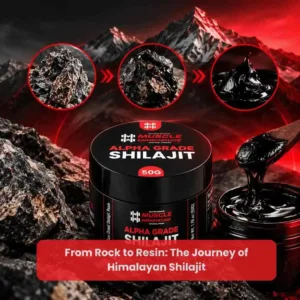
The Himalayan Shilajit Journey begins in mountainous regions where natural organic materials, rocky environments and changing weather conditions contribute to the setting in which Shilajit... Continue reading

Mountain-Sourced Shilajit is a natural material associated with rocky environments, organic compounds and geological conditions found in mountainous regions. Unlike many conventional supplements, Shilajit originates... Continue reading