

No products in the cart.
Return To Shop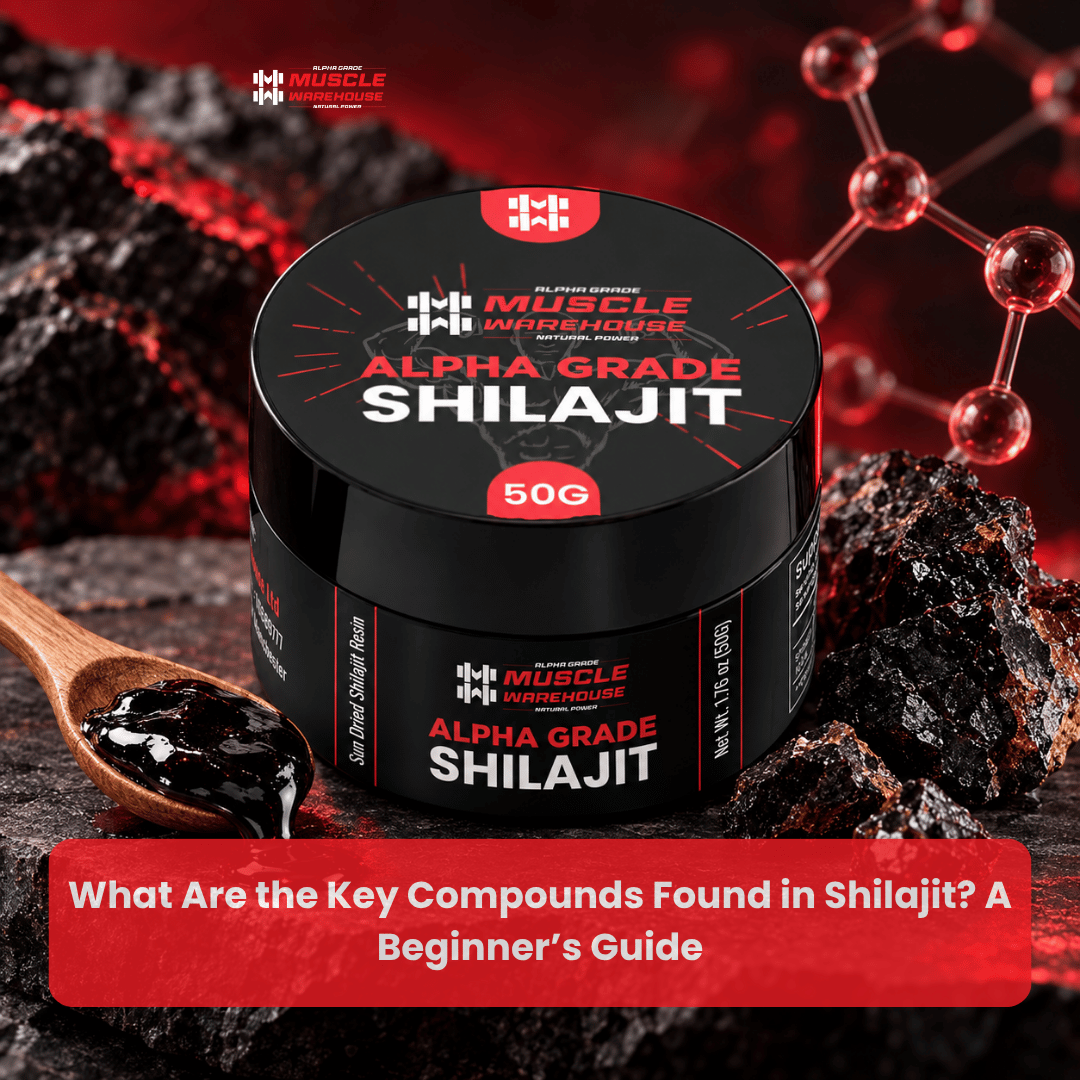
What Are the Key Compounds Found in Shilajit? A Beginner’s Guide
Key Compounds Found in Shilajit are responsible for much of the interest surrounding this traditional mineral-rich substance. Pure Shilajit is a naturally occurring material associated with mountainous regions, including areas of the Himalayas and Karakoram. It contains a complex mixture of organic substances, minerals and other naturally occurring compounds.
For beginners, understanding these compounds can make it easier to read Shilajit product information and compare different products. However, Shilajit is not made up of one single active ingredient. Its composition can vary according to its source, formation, collection and purification process.
What Is Shilajit?
Before looking at the Key Compounds Found in Shilajit, it helps to understand what Shilajit actually is.
Shilajit is a dark, resin-like natural substance that develops in mountainous environments over long periods. It has traditionally been collected from rocky areas and prepared before being offered as a finished product.
Raw Shilajit can contain unwanted materials, so responsible processing and purification are important steps before it is packaged for consumers. The final composition can also differ between sources.
This is why product information and testing can be useful when comparing different Shilajit products.
Fulvic Acid
Fulvic acid is one of the most frequently discussed compounds associated with Shilajit.
Fulvic substances are organic compounds that can develop through the decomposition of plant and other organic material. Shilajit contains fulvic compounds as part of its wider organic composition.
However, the amount and composition can vary between samples. Therefore, buyers should not assume that every Shilajit product contains the same concentration.
Fulvic acid should also be considered as one component of Shilajit rather than the sole measure of product quality.
Humic Substances
Another group associated with Shilajit is humic substances. These are complex organic materials that can occur naturally as plant and organic matter breaks down over long periods.
Humic substances are often discussed alongside fulvic compounds because both are part of naturally occurring organic matter. Their presence contributes to the complex chemical profile of Shilajit.
For beginners, the key point is that Shilajit contains several types of organic compounds rather than one isolated substance.
Minerals
Minerals are another important part of the Key Compounds Found in Shilajit.
Depending on its geological source, Shilajit can contain various minerals and trace elements. The exact mineral profile can differ because geological conditions are not identical in every mountainous region.
This variation is one reason laboratory testing can provide useful information about a specific batch.
Rather than assuming that all Shilajit has the same mineral content, consumers should look for clear product information and appropriate testing where available.
Amino Acids
Shilajit may also contain amino acids and other nitrogen-containing compounds. Amino acids are naturally occurring compounds that form part of many biological materials.
The presence and quantity of individual compounds can vary according to the raw material and processing conditions. Therefore, a general description of Shilajit should not be treated as a guaranteed profile for every product.
For buyers, this reinforces the importance of checking information provided for the actual product being purchased.
Dibenzo-Alpha-Pyrones
Dibenzo-alpha-pyrones are another group of compounds that researchers have identified in Shilajit.
These compounds are often mentioned in scientific discussions about Shilajit’s chemical composition. However, the presence of a compound does not automatically prove a particular health effect in humans.
For beginners, it is useful to separate two things: identifying compounds in a natural substance and proving what those compounds do when consumed. Research into Shilajit continues, and evidence can vary depending on the compound and study.
Other Organic Compounds
The Key Compounds Found in Shilajit are not limited to fulvic substances, minerals and dibenzo-alpha-pyrones.
Shilajit has a complex chemical profile that can include different organic acids, fatty substances, plant-derived compounds and other naturally occurring materials.
This complexity is one reason it can be difficult to describe Shilajit using a single ingredient or percentage. The overall composition depends on several factors, including where the material originates and how it is processed.
Why Shilajit Composition Can Vary
One important point for beginners is that Shilajit is a natural material, so its composition is not necessarily identical from one source to another.
Several factors can influence its final profile:
- Geographical origin
- Geological conditions
- Organic material present in the source environment
- Collection methods
- Purification process
- Storage conditions
- Laboratory testing methods
As a result, two Shilajit products can have different chemical profiles even when both are described as Himalayan Shilajit.
Why Purification Matters
Raw Shilajit and finished Shilajit products should not automatically be treated as the same thing.
Purification can help remove unwanted physical materials and prepare the raw substance for use as a finished product. The exact process can vary between suppliers.
For this reason, buyers should look for information about how a supplier handles its Shilajit rather than focusing only on claims about individual compounds.
Mountofarm explains its Shilajit sourcing and purification approach, with products associated with mountainous regions of Gilgit-Baltistan and Skardu.
How Laboratory Testing Helps
Laboratory testing can provide additional information about a Shilajit product. Depending on the testing performed, a report may provide information about specific compounds, minerals or contaminants.
Testing can therefore help suppliers verify information about a particular batch.
For buyers, it is useful to look for transparent product information and relevant laboratory documentation instead of relying solely on marketing descriptions.
A test report should also be connected to the relevant product or batch where possible.
Choosing Shilajit as a Beginner
Understanding the Key Compounds Found in Shilajit is only one part of choosing a product.
Beginners should also consider:
- Source information
- Purification details
- Ingredient information
- Laboratory testing
- Packaging
- Recommended use
- Supplier transparency
It is also important to avoid assuming that a higher stated amount of one compound automatically means a better product. Shilajit has a complex composition, and several factors contribute to the characteristics of a finished product.
Key Takeaway for Beginners
The Key Compounds Found in Shilajit include fulvic substances, humic compounds, minerals, amino acids, dibenzo-alpha-pyrones and other naturally occurring organic materials.
Their exact levels can vary depending on the source, collection conditions and processing methods. Therefore, understanding the complete product profile is more useful than focusing on one compound alone.
For anyone researching Shilajit, clear sourcing, purification information and laboratory testing can provide useful context before making a purchase.
Conclusion
The Key Compounds Found in Shilajit form a complex mixture rather than a single active ingredient. Fulvic substances, minerals, humic compounds, amino acids and other organic materials can all contribute to its natural chemical profile.
If you are researching Himalayan Shilajit, look beyond individual compound claims and consider the source, purification process and available testing information.
Looking for traditionally sourced Shilajit? Mountofarm offers Shilajit products sourced from the mountainous regions of Gilgit-Baltistan, with product information focused on sourcing, purification and laboratory testing.
Related posts

Dibenzo-Alpha-Pyrones in Shilajit are a group of organic compounds discussed in scientific research into the chemical composition of this natural material. Researchers study these compounds... Continue reading

Shilajit Composition can differ between natural samples because geological conditions, organic materials, geographical origins and environmental factors vary across mountain regions. Although Shilajit often appears... Continue reading
The history of Shilajit research spans centuries, from traditional medical records to modern scientific investigations into its chemical composition, geological origins and potential biological effects.... Continue reading

The Chemical Composition of Shilajit is an important area of scientific research because Shilajit contains a complex mixture of naturally occurring organic substances and mineral... Continue reading
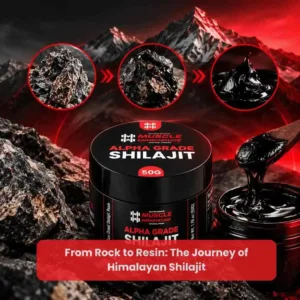
The Himalayan Shilajit Journey begins in mountainous regions where natural organic materials, rocky environments and changing weather conditions contribute to the setting in which Shilajit... Continue reading