

No products in the cart.
Return To Shop
Why Can Shilajit Composition Differ Between Natural Samples?
Shilajit Composition can differ between natural samples because geological conditions, organic materials, geographical origins and environmental factors vary across mountain regions. Although Shilajit often appears as a dark, resin-like substance, its chemical characteristics are not identical in every sample.
Researchers study these differences to understand the presence of fulvic substances, humic compounds, mineral elements and other organic materials. Furthermore, collection methods and purification processes can influence the composition of finished Shilajit products.
For UK buyers, understanding these variations helps explain why sourcing information, laboratory testing and product transparency matter when comparing Himalayan Shilajit.
What Is Shilajit Composition?
Shilajit Composition refers to the mixture of organic and inorganic substances found within Shilajit.
Researchers commonly investigate fulvic substances, humic compounds, mineral constituents and other naturally occurring organic materials. However, the proportions of these components can vary between samples.
Unlike supplements containing a single isolated ingredient, Shilajit has a complex chemical profile. Therefore, scientists use different laboratory techniques to study its components.
Additionally, the original source material and processing history can affect analytical results. Consequently, researchers must consider the characteristics of each sample rather than assuming that all Shilajit products share an identical composition.
1. How Geological Sources Influence Shilajit Composition
Geological surroundings contribute to differences in Shilajit Composition because mountain regions contain varying rock formations and mineral environments.
For example, the geological characteristics of one collection area may differ from those of another. These variations can influence the inorganic materials associated with natural Shilajit samples.
However, geological origin alone cannot establish the complete chemical profile of a product.
Researchers therefore examine individual samples to understand their mineral constituents and other chemical characteristics.
For consumers, clear sourcing information provides useful background, but laboratory analysis offers more specific information about the tested material.
2. Why Organic Materials Create Natural Differences
Organic materials form an important part of the complex natural environment associated with Shilajit.
Different mountainous locations contain varying biological materials and environmental conditions. These differences may contribute to variation in the organic substances associated with Shilajit.
Researchers investigate humic substances and other organic compounds to understand the material’s chemical characteristics.
Nevertheless, scientists have not fully established every aspect of Shilajit’s natural formation.
Therefore, claims suggesting that one particular plant or organic source always produces superior Shilajit should be treated carefully.
Understanding the diversity of organic materials helps explain why natural samples may have different chemical profiles.
3. How Altitude and Climate Affect Natural Shilajit
Altitude and climate contribute to the environmental conditions surrounding natural Shilajit.
Mountain regions experience changes in temperature, rainfall, snowfall and moisture. These conditions influence the surrounding landscape and the environment in which Shilajit-associated material occurs.
However, scientists cannot determine product quality from altitude alone.
A sample collected at a higher elevation does not automatically contain more desirable compounds than material collected elsewhere.
Similarly, seasonal weather conditions cannot independently establish purity.
For this reason, Shilajit Composition should be assessed through appropriate analytical methods rather than broad claims about mountain climate.
4. Why Fulvic Substances Vary Between Samples
Fulvic substances are frequently examined during research into Shilajit Composition.
These naturally occurring organic materials form part of the broader humic fraction associated with Shilajit.
However, their measured concentrations can vary depending on source material, sample preparation and analytical techniques.
Different laboratories may also use different extraction and measurement procedures.
Consequently, comparing reported fulvic acid percentages without understanding the testing method can produce misleading conclusions.
A higher reported concentration does not automatically establish greater purity, quality or effectiveness.
UK buyers should therefore review available laboratory information instead of relying only on percentages displayed in product descriptions.
5. How Mineral Content Changes Between Natural Sources
Mineral constituents can differ between Shilajit samples because natural geological environments are not identical.
Researchers use techniques such as inductively coupled plasma mass spectrometry (ICP-MS) to investigate selected elements.
These methods help scientists identify and measure mineral elements within prepared samples.
However, the presence of a mineral does not automatically establish a meaningful nutritional benefit.
Additionally, naturally sourced materials may contain undesirable elements, including certain heavy metals.
Therefore, laboratory testing plays an important role in evaluating selected contaminants and understanding the chemical characteristics of individual samples.
6. How Collection and Storage Affect Shilajit Samples
Collection practices can influence the condition of raw Shilajit before laboratory analysis or processing.
For example, material collected from rocky surfaces may contain soil particles, mineral fragments or other unwanted substances.
Handling and storage conditions may also affect moisture levels and some physical characteristics.
Consequently, researchers must consider sample preparation and storage when comparing analytical results.
These factors are particularly important when studying raw material from different collection locations.
However, physical appearance alone cannot reveal the complete chemical composition of a sample.
7. How Purification Changes Shilajit Composition
Purification is an important stage in preparing raw Shilajit for finished products.
Raw material may contain unwanted particles and contaminants that require appropriate processing.
Depending on the method, purification can reduce certain unwanted substances and alter the concentrations of selected components.
However, processing methods differ between manufacturers.
Therefore, the Shilajit Composition of a finished resin may differ from that of its original raw material.
Researchers can compare samples before and after purification to investigate these changes.
Nevertheless, purification does not automatically guarantee that every potential contaminant has been removed. Relevant laboratory testing remains important.
Why Do Laboratory Results Differ Between Shilajit Samples?
Laboratory results can differ because of natural source variation, processing methods, sample preparation and analytical techniques.
For example, one laboratory may investigate mineral elements, while another examines selected organic compounds.
Even when laboratories study similar substances, differences in methods can influence reported values.
Therefore, researchers should clearly describe their procedures and measurement units.
For UK consumers, a laboratory report is most useful when it identifies the tested sample, relevant parameters and reported results.
Does Different Shilajit Composition Mean Different Quality?
Not necessarily.
Natural variation does not automatically indicate that one sample is better or worse than another.
However, certain differences may matter when assessing product quality, particularly if laboratory results identify unwanted contaminants.
A reliable assessment should consider the product’s source, ingredients, processing and available testing information.
Furthermore, colour, texture and aroma should not serve as substitutes for laboratory analysis.
Consumers should avoid assuming that darker resin or a stronger natural smell always indicates higher purity.
How UK Buyers Can Compare Shilajit Products
Understanding Shilajit Composition helps UK consumers make informed purchasing decisions.
Before buying Himalayan Shilajit, consider the following:
- Source information: Check whether the supplier explains the product’s geographical origin.
- Ingredients: Review the complete ingredient list.
- Purification: Look for information about how the raw material is processed.
- Laboratory testing: Check whether relevant analytical reports are available.
- Certificate of Analysis: Review the substances tested and the reported results.
- Product format: Compare resin, capsules and drops.
- Storage instructions: Follow the manufacturer’s recommendations.
- Supplier transparency: Choose sellers who provide clear product details.
These checks provide a more balanced approach than relying only on claims about altitude, natural origin or mineral content.
Choosing Himalayan Shilajit From Muscle Warehouse
For UK customers, comparing product information is an important part of choosing Pure Himalayan Shilajit.
Muscle Warehouse, based in Rochdale, Greater Manchester, offers Shilajit resin, capsules and drops.
Each format has different handling and serving characteristics. Resin provides a traditional sticky consistency, while capsules offer convenient portioning. Drops provide an alternative liquid format.
Additionally, customers can review the available product information and laboratory-testing documentation before purchasing.
Because formulations may differ, buyers should examine the ingredients and instructions for the specific product they are considering.
Conclusion
Shilajit Composition can differ between natural samples because geological environments, organic materials, mineral constituents, collection conditions and processing methods vary.
Researchers use laboratory techniques to examine these differences and better understand the chemical characteristics of Himalayan Shilajit.
However, natural variation alone does not establish product quality. UK buyers should also consider sourcing information, purification, ingredients and available laboratory testing.
Looking for Pure Himalayan Shilajit in the UK? Explore Muscle Warehouse’s Shilajit resin, capsules and drops, and compare the available product information before choosing a format that suits your routine.


Related posts

Dibenzo-Alpha-Pyrones in Shilajit are a group of organic compounds discussed in scientific research into the chemical composition of this natural material. Researchers study these compounds... Continue reading
The history of Shilajit research spans centuries, from traditional medical records to modern scientific investigations into its chemical composition, geological origins and potential biological effects.... Continue reading

The Chemical Composition of Shilajit is an important area of scientific research because Shilajit contains a complex mixture of naturally occurring organic substances and mineral... Continue reading
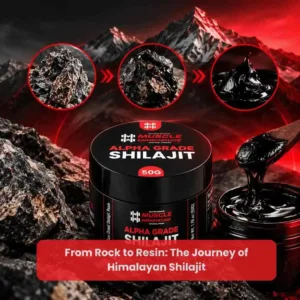
The Himalayan Shilajit Journey begins in mountainous regions where natural organic materials, rocky environments and changing weather conditions contribute to the setting in which Shilajit... Continue reading

Mountain-Sourced Shilajit is a natural material associated with rocky environments, organic compounds and geological conditions found in mountainous regions. Unlike many conventional supplements, Shilajit originates... Continue reading