

No products in the cart.
Return To Shop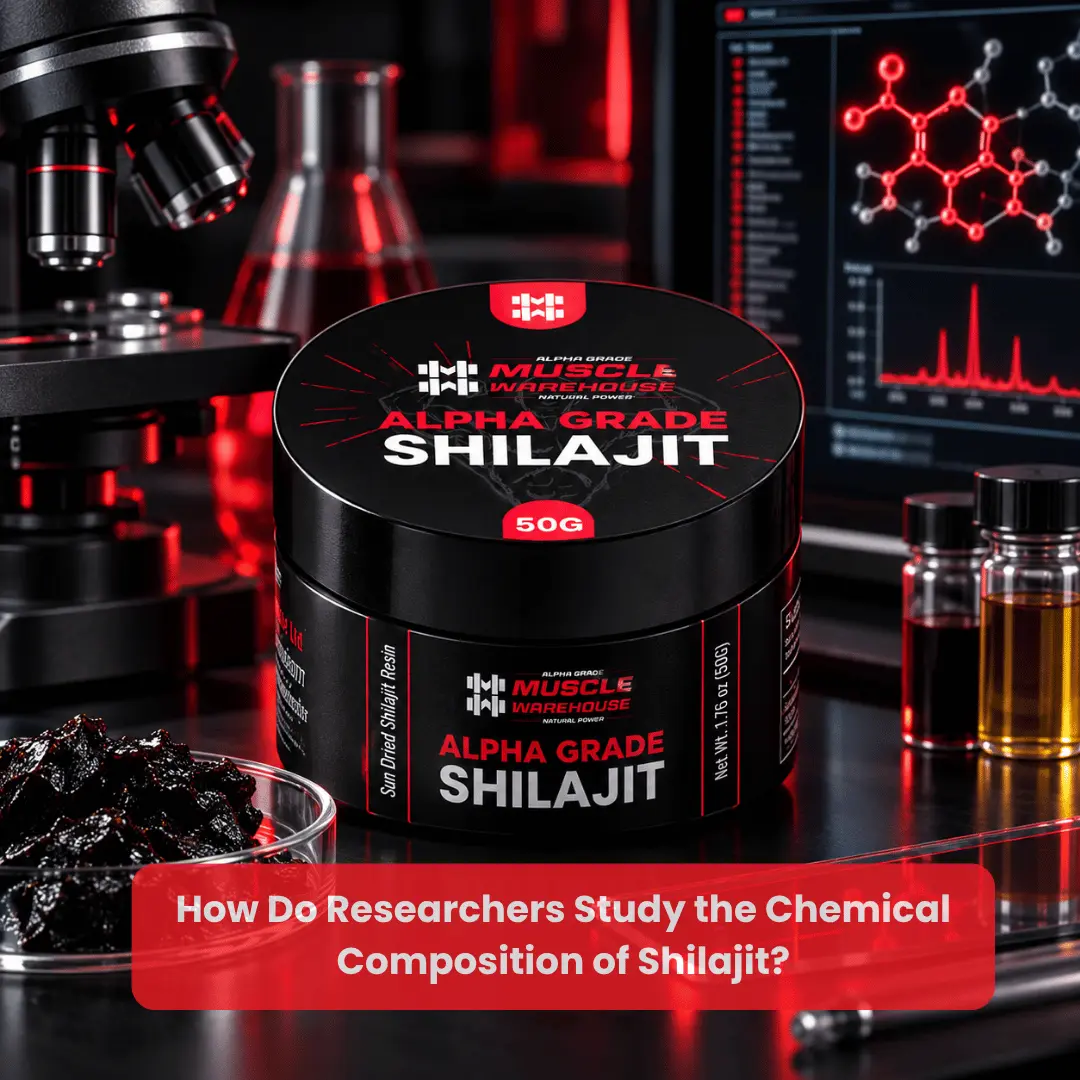
How Do Researchers Study the Chemical Composition of Shilajit?
The Chemical Composition of Shilajit is an important area of scientific research because Shilajit contains a complex mixture of naturally occurring organic substances and mineral components. Researchers use laboratory techniques to identify these compounds, examine their concentrations and understand how Shilajit varies between different sources.
Unlike supplements made from a single ingredient, Himalayan Shilajit contains multiple substances associated with its natural geological environment. Therefore, scientists cannot fully assess its composition through appearance, colour or texture alone.
Understanding how researchers study Shilajit helps UK buyers recognise the importance of laboratory analysis, product transparency and reliable testing information.
What Is the Chemical Composition of Shilajit?
The Chemical Composition of Shilajit includes a mixture of organic compounds, humic substances and mineral constituents. However, the exact proportions can vary depending on geographical origin, source material and processing methods.
Researchers commonly investigate several components, including:
- Fulvic substances: Organic compounds associated with the humic fraction of Shilajit
- Humic substances: Complex organic materials that contribute to its overall composition
- Mineral elements: Naturally occurring elements that may vary between samples
- Other organic compounds: Additional substances that researchers identify through chemical analysis
Because Shilajit contains a complex mixture, scientists often use several analytical methods rather than relying on one laboratory test.
1. How Researchers Collect Shilajit Samples
Before studying the Chemical Composition of Shilajit, researchers collect samples from different geographical locations or obtain prepared products for laboratory examination.
They record information about sample origin, collection conditions and processing history whenever possible.
These details matter because environmental conditions and purification methods can influence the material’s characteristics.
Researchers may also compare raw and purified samples to identify differences in composition.
However, scientists must consider contamination, sample handling and storage conditions when interpreting the results.
2. How Scientists Identify Organic Compounds in Shilajit
Researchers use analytical chemistry techniques to investigate organic substances found in Shilajit.
One commonly used approach involves chromatography, which separates components of a complex mixture.
For example, high-performance liquid chromatography (HPLC) can help researchers examine selected organic compounds.
Scientists may combine chromatography with other detection techniques to identify or measure particular substances.
Nevertheless, no single method identifies every compound in Shilajit. Therefore, researchers select analytical techniques according to the substances they want to investigate.
3. How Researchers Measure Fulvic Substances
Fulvic substances are frequently discussed in research on the Chemical Composition of Shilajit.
These substances form part of a broader group of naturally occurring organic materials associated with humic matter.
Researchers may use extraction, separation and analytical procedures to investigate fulvic fractions.
However, results depend on the method used, the sample preparation process and how researchers define and measure the relevant fraction.
Consequently, consumers should avoid comparing fulvic acid percentages from different products without understanding the testing methods.
A higher reported percentage does not automatically establish better quality or greater effectiveness.
4. How Scientists Analyse Mineral Content
Mineral analysis helps researchers examine the inorganic components of Shilajit.
Scientists may use techniques such as inductively coupled plasma mass spectrometry (ICP-MS) or inductively coupled plasma optical emission spectrometry (ICP-OES).
These methods can measure selected elements within a prepared sample.
Researchers use the results to study mineral variation and investigate certain contaminants.
However, detecting a mineral does not automatically mean that it provides a meaningful nutritional benefit.
The amount present, chemical form and other factors influence how the findings should be interpreted.
5. How Researchers Test Shilajit for Heavy Metals
Heavy-metal testing is an important part of evaluating Shilajit products because naturally sourced materials may contain undesirable contaminants.
Laboratories may examine elements such as:
- Lead
- Arsenic
- Mercury
- Cadmium
Researchers and testing laboratories can use appropriate analytical instruments to measure these elements.
However, the presence of a laboratory report does not automatically confirm that every possible contaminant has been assessed.
Buyers should check which elements were tested, the reported concentrations and whether the results relate to the product being purchased.
6. How Spectroscopy Helps Study Shilajit
Spectroscopy allows scientists to investigate how substances interact with electromagnetic radiation.
For example, Fourier-transform infrared spectroscopy (FTIR) can provide information about chemical functional groups within a sample.
Other spectroscopic techniques may help researchers examine molecular structures or compare samples.
Because Shilajit contains many different compounds, spectroscopy can provide useful information about its chemical characteristics.
However, researchers often combine these findings with chromatography or other analytical methods to obtain a more complete picture.
7. How Researchers Compare Raw and Purified Shilajit
Scientists may compare raw and purified samples to understand how processing influences the Chemical Composition of Shilajit.
Raw material can contain unwanted particles and other substances associated with its collection environment.
Purification aims to reduce unwanted material and prepare Shilajit for use in finished products.
Researchers can analyse samples before and after processing to examine changes in selected compounds or contaminants.
Nevertheless, purification methods differ between manufacturers. Therefore, results from one processing method should not automatically be applied to every Shilajit product.
Why Does Shilajit Composition Vary Between Sources?
The Chemical Composition of Shilajit can vary because different mountain environments contain different geological and organic materials.
Altitude, climate, moisture and local environmental conditions may contribute to differences between sources.
Additionally, collection methods, purification and storage can influence the characteristics of the finished material.
For this reason, researchers study individual samples rather than assuming that all Shilajit products share an identical chemical profile.
These differences also explain why laboratory findings should be interpreted within the context of the tested sample.
Can Chemical Testing Confirm Shilajit Quality?
Chemical testing provides valuable information, but one test cannot establish every aspect of quality.
For example, mineral analysis can measure selected elements, while chromatography can investigate particular organic compounds.
Similarly, heavy-metal testing can assess specified contaminants.
However, researchers may need additional tests to examine other characteristics.
Therefore, the Chemical Composition of Shilajit should be evaluated through suitable analytical methods, relevant quality criteria and transparent reporting.
Colour, texture and aroma alone cannot replace laboratory analysis.
What Should UK Buyers Check in a Shilajit Laboratory Report?
UK consumers can use laboratory information to compare products more carefully.
Before purchasing, consider the following:
- Product identification
Check whether the report identifies the tested sample or product.
- Laboratory information
Look for clear information about the laboratory responsible for testing.
- Tested substances
Review which compounds, elements or contaminants the report covers.
- Results and units
Check the reported values and measurement units.
- Testing date
Consider when the laboratory conducted the analysis.
- Product relevance
Confirm that the report relates to the product or batch being considered, where that information is available.
These details can help buyers understand the scope of the testing rather than relying only on promotional statements.
Choosing Lab-Tested Shilajit From Muscle Warehouse
Understanding the Chemical Composition of Shilajit can help UK consumers make informed purchasing decisions.
Muscle Warehouse, based in Rochdale, Greater Manchester, offers Himalayan Shilajit in resin, capsule and drop formats.
Customers can compare the available product information, ingredients, serving instructions and laboratory-testing documentation.
However, buyers should remember that different product formats may have different formulations.
Therefore, reviewing the information for the specific product is more useful than assuming that every Shilajit supplement has the same composition.
FAQs:
- What is the chemical composition of Shilajit?
The Chemical Composition of Shilajit includes fulvic substances, humic compounds, mineral elements and other naturally occurring organic materials. The exact composition varies depending on the source and processing methods.
- How do researchers analyse the chemical composition of Shilajit?
Researchers use laboratory techniques such as chromatography, spectroscopy and elemental analysis to identify compounds, measure selected substances and investigate contaminants.
- Why is fulvic acid important in Shilajit research?
Fulvic substances form part of Shilajit’s complex organic composition. Researchers study these substances to understand their chemical characteristics and how their concentrations vary between samples.
- Can laboratory testing confirm the purity of Shilajit?
Laboratory testing can assess selected compounds and contaminants, including heavy metals. However, no single test can confirm every aspect of purity, authenticity or product quality.
- Why does the chemical composition of Shilajit vary between sources?
The Chemical Composition of Shilajit can vary because of differences in geological conditions, organic materials, geographical origin, purification methods and processing techniques.
Conclusion
The Chemical Composition of Shilajit is studied through laboratory methods that examine organic compounds, fulvic substances, mineral elements and selected contaminants.
Researchers use chromatography, spectroscopy and elemental analysis to understand the complex characteristics of Shilajit. However, results can vary according to sample origin, preparation and testing methods.
UK buyers should therefore review source information, ingredients, processing details and relevant laboratory reports before purchasing Pure Himalayan Shilajit.
Looking for Lab-Tested Shilajit in the UK? Explore Muscle Warehouse’s Shilajit resin, capsules and drops, and compare the available product information before choosing a format that suits your routine.


Related posts

Dibenzo-Alpha-Pyrones in Shilajit are a group of organic compounds discussed in scientific research into the chemical composition of this natural material. Researchers study these compounds... Continue reading

Shilajit Composition can differ between natural samples because geological conditions, organic materials, geographical origins and environmental factors vary across mountain regions. Although Shilajit often appears... Continue reading
The history of Shilajit research spans centuries, from traditional medical records to modern scientific investigations into its chemical composition, geological origins and potential biological effects.... Continue reading
The Himalayan Shilajit Journey begins in mountainous regions where natural organic materials, rocky environments and changing weather conditions contribute to the setting in which Shilajit... Continue reading

Mountain-Sourced Shilajit is a natural material associated with rocky environments, organic compounds and geological conditions found in mountainous regions. Unlike many conventional supplements, Shilajit originates... Continue reading