

No products in the cart.
Return To Shop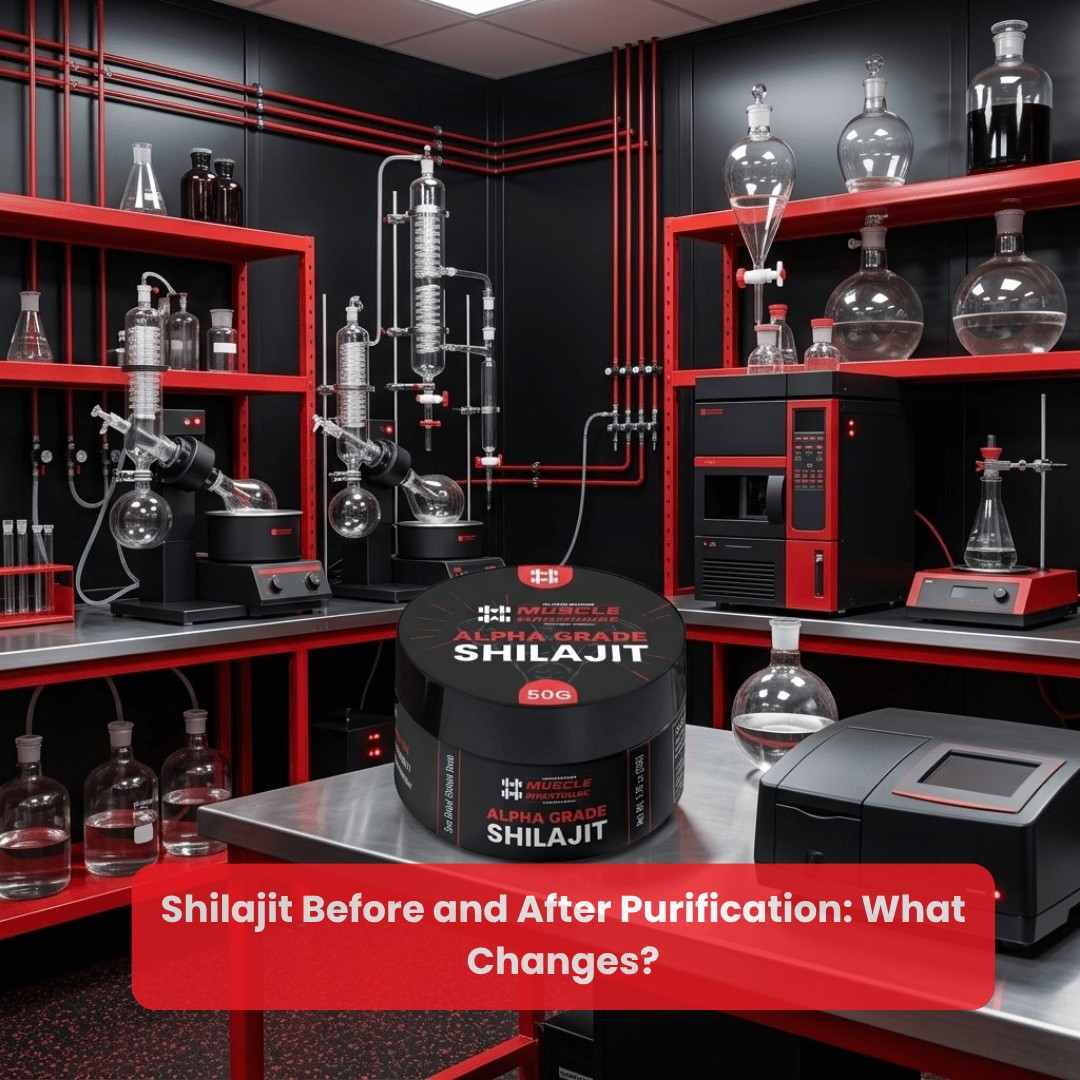
Shilajit Before and After Purification: What Changes?
Shilajit Before and After Purification can look and behave differently because raw material collected from mountainous environments is not the same as a finished Shilajit product. Before purification, the material can contain naturally occurring organic matter, mineral particles and other unwanted material. After suitable processing, the resulting Shilajit is prepared for use as a finished product.Understanding Shilajit Before and After Purification helps UK buyers understand why processing information matters when comparing different products. However, purification should not be judged by colour or texture alone. Source, processing, ingredients and available laboratory testing should also be considered.
What Is Shilajit Before Purification?
Raw Shilajit is collected from mountainous areas and can contain material that should not be present in a finished supplement. Its natural composition can vary depending on the source environment and collection conditions.
At this stage, the material may contain small particles, earthy matter and other naturally associated substances. Therefore, raw material should not simply be treated as equivalent to a ready-to-use Shilajit supplement.
The exact appearance and consistency can also vary between sources.
Shilajit Before and After Purification: The Main Difference
The main difference between Shilajit Before and After Purification is the level of processing the material has undergone.
Before purification, the collected material is closer to its natural source and may contain unwanted substances. During processing, suitable methods can be used to separate and remove undesirable material.
After purification, the Shilajit is prepared into a more consistent finished form, such as resin. Depending on the supplier, it may also be further processed into capsules or drops.
Therefore, purification is an important stage between collection and the final product.
Why Does Shilajit Need Purification?
Natural materials collected from mountain environments can contain substances that are not intended to remain in a finished supplement. Purification is used to process the material and help remove unwanted components.
The exact purification method can vary between suppliers. For this reason, buyers should not assume that every Shilajit product has been processed in exactly the same way.
A transparent supplier should provide useful information about how the product is prepared, where appropriate, rather than making broad claims without supporting information.
How Does Shilajit Change During Purification?
One of the noticeable differences in Shilajit Before and After Purification can be its physical appearance.
Raw material may appear less uniform, while processed Shilajit can have a more consistent colour and texture. Resin is often dark and sticky, although appearance can vary depending on the source and processing method.
Purification can also affect consistency because unwanted particles and other material are removed during processing.
However, a darker colour or smoother texture does not automatically prove that a product is pure. Physical appearance should always be considered alongside other quality information.
Does Purification Change the Natural Composition?
Purification is intended to remove unwanted material while retaining the desired components of Shilajit. However, the final composition can depend on the original source and processing method.
Shilajit naturally contains a mixture of organic compounds and mineral components. Fulvic substances are among the compounds commonly discussed in Shilajit research, but their presence and concentration can vary.
Therefore, it is better to assess a finished product using its available ingredient and testing information rather than assuming that every purified Shilajit product has exactly the same composition.
Shilajit Before and After Purification: Changes in Texture
Texture can also change during processing.
Raw material may have an inconsistent texture because it has not yet undergone the steps required to prepare a finished product. After processing, Shilajit resin may become smoother, more uniform and easier to handle.
Temperature can also affect resin. In warmer conditions, Shilajit may become softer and more sticky. In cooler conditions, it can become firmer.
As a result, texture alone is not a reliable test of purification or authenticity.
What Happens to Unwanted Material?
A key purpose of suitable purification is to reduce or remove unwanted substances from the collected material.
This can include physical particles and other material that should not remain in a finished supplement. However, the exact substances removed depend on the original material and the processing method.
Laboratory testing can provide more useful information than simply looking at the finished resin. Where available, buyers can review testing documents or a Certificate of Analysis to understand what has been tested.
Is Purified Shilajit the Same as Raw Shilajit?
No. Raw material and a finished purified product should not be treated as identical.
Raw Shilajit is closer to the collected source material, while purified Shilajit has undergone processing to prepare it for use. The finished product may therefore have different physical characteristics from the original material.
This distinction is particularly important when buying Shilajit online. A product described as raw should not automatically be assumed to have the same characteristics as a properly processed finished product.
How Can UK Buyers Check Purification Information?
UK buyers can look beyond product photos and marketing claims when comparing Shilajit.
Consider checking:
- Source information: Is the origin clearly explained?
- Processing details: Does the supplier explain how the material is prepared?
- Ingredients: Is the ingredient information easy to understand?
- Laboratory testing: Is testing information available?
- Certificate of Analysis: Is a COA provided where applicable?
- Product format: Is it resin, capsules or drops?
- Serving guidance: Are clear manufacturer instructions provided?
- Storage: Are suitable storage instructions available?
- Supplier transparency: Does the seller provide useful product information?
These points can give a more complete picture than colour, smell or texture alone.
Does Purification Make Shilajit Better?
Purification is an important processing step, but the word “purified” alone does not guarantee that a product is suitable or high quality.
A finished product should still be assessed according to its source, ingredients, processing information, testing and supplier transparency.
Likewise, buyers should be cautious about claims that suggest a product is automatically superior simply because it has been purified. Quality assessment requires more than one factor.
Shilajit Resin After Purification
Purified Shilajit is commonly sold as resin because this format retains a concentrated, sticky consistency.
The finished resin can be easier to portion according to the manufacturer’s instructions. It can also have a noticeable earthy or mineral-like aroma.
For people who prefer a more convenient format, purified Shilajit can also be prepared as capsules or drops. Each format has different characteristics, so buyers should compare the product information before choosing.
Why Testing Matters After Purification
Purification and laboratory testing are separate parts of product quality assessment.
Purification is a processing stage, while laboratory testing can help assess specific characteristics of the finished material. For example, testing may be used to check particular contaminants or composition parameters.
Therefore, Shilajit Before and After Purification should not be compared only by appearance. Testing information can provide a more useful basis for understanding the finished product.
Choosing Pure Shilajit in the UK
When buying Pure Shilajit, UK consumers should consider the complete product information rather than relying on one claim.
Look for clear information about source, processing, ingredients, testing and storage. Also consider whether the product format fits your routine.
Muscle Warehouse offers Shilajit in different formats, including resin, capsules and drops, allowing UK buyers to compare options based on their preferred form.
Conclusion
Shilajit Before and After Purification can differ in appearance, texture, consistency and overall preparation. Raw material may contain naturally associated unwanted substances, while suitable purification helps prepare the material for use as a finished Shilajit product.
However, colour, smell and texture alone cannot confirm purity. UK buyers should also consider source information, processing, ingredients, laboratory testing and supplier transparency.
Looking for Pure Shilajit in the UK? Explore Muscle Warehouse’s Shilajit resin, capsules and drops and review the available product information before choosing.

Related posts
Shilajit colour and texture are two of the first things people notice when buying shilajit resin. Genuine shilajit often has a dark brown to almost... Continue reading
A pure shilajit product label gives buyers important information about what they are purchasing and how to use it. Therefore, checking the label should form... Continue reading
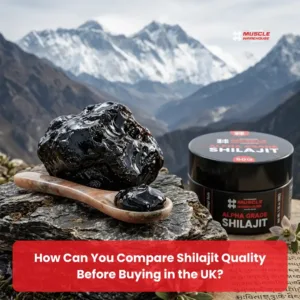
Buying shilajit in the UK requires more than comparing prices or product photos. Pure Shilajit quality can vary because products differ in sourcing, purification, processing,... Continue reading
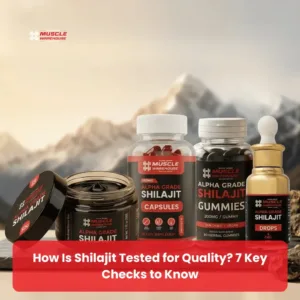
When buying shilajit, quality should come before price or packaging. Because shilajit comes from a natural source, its composition can vary according to sourcing, processing... Continue reading

Choosing himalayan shilajit high quality products requires more than looking at packaging or price. UK buyers should consider purity, processing, laboratory testing and product information... Continue reading